Meet our Invited Speakers

DANIELLE DOBBE-KALKMAN
Educational Advisor. Radboud University Medical Center, Nijmegen, The Netherlands
Danielle Kalkman is an enthusiastic and dedicated educational consultant with extensive experience in designing and improving evidence‑based learning trajectories. With a background in educational sciences and a career spanning medical education, professional development, and curriculum innovation, she has contributed to high‑quality learning at institutions such as Radboudumc Health Academy and the Dutch Expert Centre for Screening (LRCB). Danielle excels at translating research‑based insights into practical, impactful learning solutions.
She is a member of the EFOMP Education and Training Committee and an educational advisor for the EUTEMPE consortium.
🕒 25 Sep | ROOM 1+2 (FIRST FLOOR) | 11:10 – 12:40
SESSION – How to make your presentation radiant!
As a medical physicist you present complex information in many settings, from team meetings to large conferences. Regardless of the audience, the goal is the same: deliver a clear message that is understood and remembered.
This presentation explores two key ingredients for a radiant presentation. First, less is more. By focusing on the core message and avoiding unnecessary detail, you guide your audience along a clear path rather than a maze. Second, connection matters. Engaging with your audience captures attention, improves understanding, and boosts retention. Together, focus and connection add clarity, personality, and radiance to your presentations.
XUN JIA
Professor and Chief of Medical Physics Division. Department of Radiation Oncology and Molecular Radiation Sciences, Johns Hopkins University
Xun Jia, PhD, FAAPM, FAIMBE, is a Professor and Chief of the Medical Physics Division in the Department of Radiation Oncology and Molecular Radiation Sciences at the Johns Hopkins University School of Medicine. He also serves as Director of the Medical Physics Education Program and Co-Lead of the Cancer Imaging and Image-Guided Therapy Program within the Sidney Kimmel Comprehensive Cancer Center.
His research focuses on AI-driven treatment planning, advanced medical imaging, and GPU-accelerated physics-based modeling. Dr. Jia leads multiple NIH-funded projects and international collaborations, and is actively involved in professional leadership through professional societies and editorial roles in major journals.
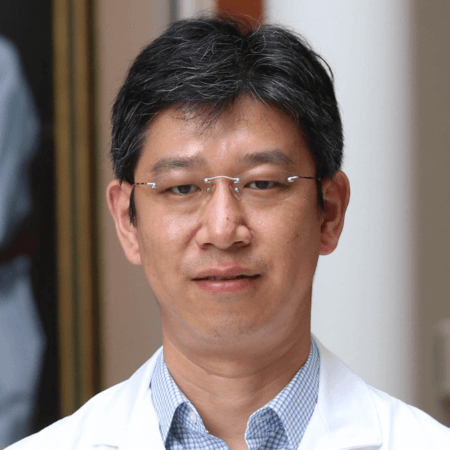
XUN JIA
Professor and Chief of Medical Physics Division. Department of Radiation Oncology and Molecular Radiation Sciences, Johns Hopkins University
Xun Jia, PhD, FAAPM, FAIMBE, is a Professor and Chief of the Medical Physics Division in the Department of Radiation Oncology and Molecular Radiation Sciences at the Johns Hopkins University School of Medicine. He also serves as Director of the Medical Physics Education Program and Co-Lead of the Cancer Imaging and Image-Guided Therapy Program within the Sidney Kimmel Comprehensive Cancer Center.
His research focuses on AI-driven treatment planning, advanced medical imaging, and GPU-accelerated physics-based modeling. Dr. Jia leads multiple NIH-funded projects and international collaborations, and is actively involved in professional leadership through professional societies and editorial roles in major journals.
🕒 25 Sep | AUDITORIUM 2 (GROUND FLOOR) | 11:10 – 12:40
SESSION – Building intelligence in radiotherapy treatment planning
Radiotherapy treatment planning is inherently a complex decision-making process spanning multiple interconnected tasks, including target and organ delineation, prescription, plan optimization, and quality assurance. In recent years, artificial intelligence has enabled the development of powerful tools that address individual components of this workflow with growing success.
With the emergence of advanced AI decision-making capabilities, particularly foundation models and multi-agent systems, it is now both necessary and feasible to move beyond isolated tools toward building holistic, intelligent treatment planning workflows. This talk overviews this emerging paradigm and highlights recent research efforts that integrate AI across the full planning pipeline.
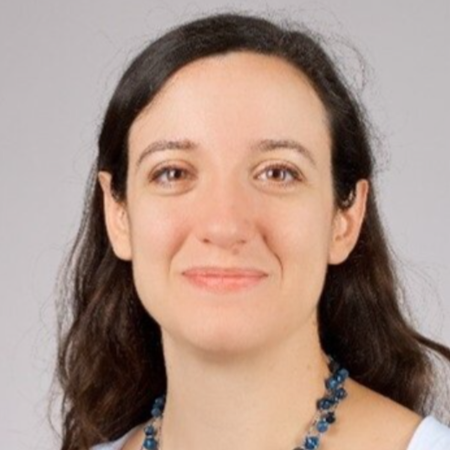
SERENA PSOROULAS
Senior Scientist / Medical Physicist in training. University Hospital Zurich
I am a medical physicist and senior scientist from Switzerland. My core expertise is in beam delivery, applied to photon C-arm linacs and proton gantries. My research activities focus on clinical implementation of new radiobiological concepts in clinical practice, focusing on spatially fractionated radiotherapy and ultra-high dose rates treatments (FLASH irradiations). I love working alongside clinicians, biologists and technicians, and with them trying to test the limits of conventional concepts. I also have expertise in innovative treatments for motion mitigation and treatments of moving tumors with protons.
🕒 25 Sep | AUDITORIUM 1 (GROUND FLOOR) | 15:20 – 16:20
SESSION – Technology meets biology: dose rates and FLASH – precision and spatial fractionation
Technology development in radiotherapy has given us tremendous advanced in precision and accuracy. However, for curious minds such as physicists’, the next challenge already approaches: can we improve treatments outcomes using biological effects? Preclinical experiments show remarkable results in term of normal tissue sparing and improvements of tumor control, using techniques such as FLASH and spatial fractionation (SFRT).
Moving them to the clinic however requires additional effort – not only from the technology development. I will review in this presentation my experience in implementing FLASH and SFRT in clinical practice, highlighting the challenges still awaiting in this field.
LUISA ALTABELLA
Senior Medical Physicist specializing in Quantitative MRI and MR-Guided Adaptive Radiotherapy. AOUI Verona
I completed my studies in Medical Physics in 2015, following research at Italian National Institute of Health focused on preclinical MR imaging. Since then, I have specialized in quantitative MRI for clinical body and neuro applications. I have also gained significant experience in radiotherapy, mainly in imaging application in RT and adaptive radiotherapy. I am currently responsible for the medical physics aspects of the MRI-Linac recently installed in our institution.
I have authored over 30 peer-reviewed publications, coordinate the AIFM-Working Group on MRI Quantification, and served as Scientific Chair for the 2024 EFOMP-AIFM course on Quantitative MRI.
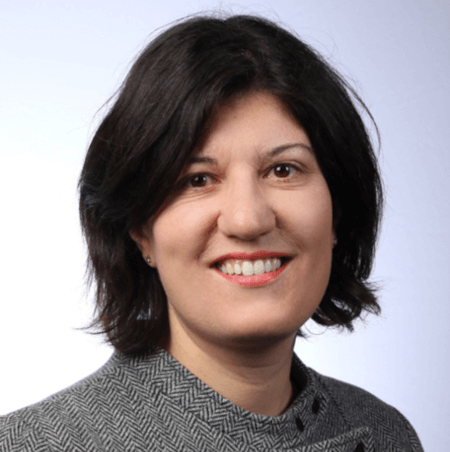
LUISA ALTABELLA
Senior Medical Physicist specializing in Quantitative MRI and MR-Guided Adaptive Radiotherapy. AOUI Verona
I completed my studies in Medical Physics in 2015, following research at Italian National Institute of Health focused on preclinical MR imaging. Since then, I have specialized in quantitative MRI for clinical body and neuro applications. I have also gained significant experience in radiotherapy, mainly in imaging application in RT and adaptive radiotherapy. I am currently responsible for the medical physics aspects of the MRI-Linac recently installed in our institution.
I have authored over 30 peer-reviewed publications, coordinate the AIFM-Working Group on MRI Quantification, and served as Scientific Chair for the 2024 EFOMP-AIFM course on Quantitative MRI.
🕒 25 Sep | AUDITORIUM 3 (GROUND FLOOR) | 11:10 – 12:40
SESSION – MR – guided radiotherapy: from adaptive to biological optimization
Resonance-guided radiotherapy (MRgRT) has transitioned from conventional inter-fractional adjustments to real-time online adaptive radiotherapy, enhancing dose escalation and healthy tissue sparing. The current frontier, biological optimization, leverages functional MRI to map tumor heterogeneity and metabolic response.
Central to this paradigm are Quantitative Imaging Biomarkers (QIB); however, their clinical utility depends on rigorous standardization. Without crossplatform reproducibility and validated acquisition protocols, biological data remains prone to inter-vendor variability. Establishing standardized QIBs is essential to move MRgRT from purely anatomical adaptation toward.
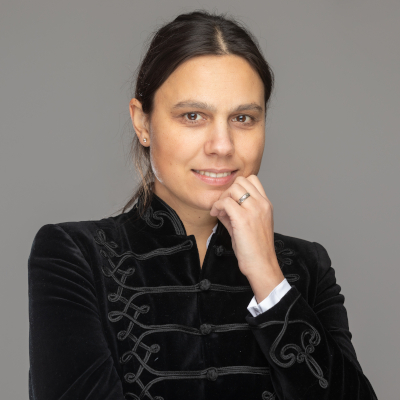
GEORGINA FRÖHLICH
Medical Physicist Expert at the National Institute of Oncology and Associate Professor at Eötvös Loránd University of Sciences in Budapest, Hungary
She has 20+ years of broad clinical research experience in radiation oncology, especially dose optimisation algorithms and biological dose integration of external beam- and brachytherapy. Extended expertise in research methodology and biomedical statistics.
Founder and leader of a ‘Medical Biophysics’ M.Sc. module, core member of the GEC-ESTRO BRAPHYQS working group and member of the Breast, Gynaecologic, and the UroGEC Working Groups. Editor of the PhiRO and Physica Medica journals. Founder of ‘The Mission of Brave’ charitable paediatric radiotherapy programme.
🕒 24 Sep | AUDITORIUM 1 (GROUND FLOOR) | 17:00 – 18:30
SESSION – Emerging Focus Areas and Physics Frontiers in Brachytherapy
Brachytherapy is undergoing a rapid renaissance, driven by advanced physics, dose calculation breakthroughs, and continuous technology integration. This presentation unpacks the most pressing «hot topics» currently shaping the European brachytherapy landscape. We explore the latest paradigms in spatial EBRT–brachytherapy dose summation spearheaded by a dedicated joint task group, and tackle the clinical reality of adopting inverse dose optimisation and Model-Based Dose Calculation Algorithms (MBDCAs) in the absence of formal consensus guidelines.
Additionally, we examine an intriguing and persistent shift observed in routine Ir-192 source strength calibrations that has raised fundamental QA questions. Finally, we highlight ESTRO’s strategic mission to boost the discipline’s visibility, empower the next generation of medical physicists, and secure the future of high-precision brachytherapy. Progress in this area requires coordinated efforts and close collaboration among all stakeholders and professional organisations.
DIMITRIS N. MIHAILIDIS
PhD, FAAPM, FACMP, FASTRO
Dimitris N. Mihailidis, PhD, FAAPM, FACMP, FASTRO, is an Associate Professor of Radiation Oncology at the University of Pennsylvania, where he serves as Director of the Medical Physics Graduate Programs. He previously led Penn Medicine’s Clinical Physics and Network Physics operations. He has held prominent roles within the AAPM, including Board Member‑at‑Large, Chair of the Therapy Physics Committee, Co‑Chair of TG‑203, and Chair of TG‑359. He has authored over 150 peer‑reviewed publications and multiple book chapters, contributing extensively to the advancement of medical physics. He has also mentored numerous graduate students, residents, and trainees across medical physics and radiation oncology.
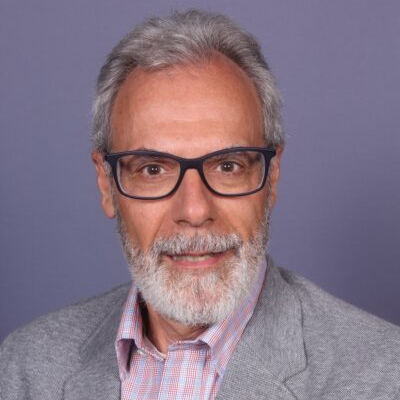
DIMITRIS N. MIHAILIDIS
PhD, FAAPM, FACMP, FASTRO
Dimitris N. Mihailidis, PhD, FAAPM, FACMP, FASTRO, is an Associate Professor of Radiation Oncology at the University of Pennsylvania, where he serves as Director of the Medical Physics Graduate Programs. He previously led Penn Medicine’s Clinical Physics and Network Physics operations. He has held prominent roles within the AAPM, including Board Member‑at‑Large, Chair of the Therapy Physics Committee, Co‑Chair of TG‑203, and Chair of TG‑359. He has authored over 150 peer‑reviewed publications and multiple book chapters, contributing extensively to the advancement of medical physics. He has also mentored numerous graduate students, residents, and trainees across medical physics and radiation oncology.
🕒 24 Sep | AUDITORIUM 1 (GROUND FLOOR) | 9:10 – 10:30
SESSION – Need for robust dosimetry of Flash beams
Accurate and robust radiation dosimetry is a cornerstone of clinical practice, supporting progress in radiobiological research, radiation therapy, diagnostic imaging, and nuclear medicine. In radiobiological experiments, reliable dose measurement is essential for establishing reproducible dose–response relationships and enabling meaningful biological interpretation and translation to the clinic. In radiation therapy clinical trials, dosimetric accuracy, consistency, and inter‑institutional comparability are critical for treatment standardization, outcome assessment, and patient safety. Similarly, in diagnostic imaging, accurate patient dose estimation underpins optimization strategies aimed at balancing image quality with radiation risk. In the field of radiopharmaceuticals, precise activity calibration and organ dose calculations are fundamental for therapy planning, toxicity assessment, and regulatory compliance.
Central to all these applications is robust reference dosimetry with traceability to national and international measurement standards, ensuring accuracy, reproducibility, and confidence across institutions and technologies. Despite advances in detector systems, computational methods, and hybrid imaging and therapy techniques, significant challenges remain due to complex radiation fields, patient‑specific variability, and evolving clinical workflows. This review discusses current challenges in clinical dosimetry and highlights emerging technologies and methodologies that define new horizons in precision and personalized radiation medicine.

ALEJANDRO BERTOLET
Director of Radiopharmaceutical Dosimetry at Massachusetts General Hospital and an Assistant Professor at Harvard Medical School
He conducts NIH-funded research on physical and radiobiological aspects of theranostics, with special focus on both radiopharmaceutical therapy and transarterial radioembolization. His research focuses on computational and image-based dosimetry for radiopharmaceutical therapy, with emphasis on targeted alpha therapy, microdosimetry, and radiobiological modeling. He develops Monte Carlo-based and mechanistic models to link radiation transport, DNA damage, and biological response.
🕒 24 Sep | AUDITORIUM 2 (GROUND FLOOR) | 17:00 – 18:30
SESSION – Subatomic Strike: The Future of Cancer Treatments with Radionuclides Therapy
Radionuclide therapy is experiencing rapid growth driven by agents such as Lu-177-PSMA-617 and Y-90 microspheres, yet clinical dosimetry and treatment optimization remain largely empirical. This lecture covers emerging approaches that aim to close this gap. We will present probabilistic frameworks that enable practical single-timepoint dosimetry through Bayesian inference on population pharmacokinetic data. Second, we will show mechanistic models of microsphere transport and deposition in liver vasculature for predictive, optimization-driven treatment planning for radioembolization. Finally, we will discuss how track-structure microdosimetry can connect physical dose to biological effect across different radionuclides, including alpha emitters, informing rational isotope selection and combination strategies.
MARK LADD
Professor at Heidelberg University and Head of Medical Physics in Radiology at the German Cancer Research Center (DKFZ) in Heidelberg
He is also affiliated as a Principal Investigator of the Erwin L. Hahn Institute for MRI at the University of Duisburg-Essen, Germany. Mark grew up in the USA and studied electrical engineering at the University of Michigan, Ann Arbor, and Stanford University, California, where he received a Bachelor of Science in 1989 and a Master of Science in 1991, respectively. While working in the medical imaging industry for General Electric, he completed his PhD at the Swiss Federal Institute of Technology (ETH Zurich) in 1998. His research focuses on methodological advances in MR imaging and spectroscopy, including imaging at ultra-high magnetic fields, radiofrequency hardware, parallel transmission, MRI safety, and magnetic resonance-guided radiotherapy. He is author or co-author of more than 350 scientific articles involving the application and improvement of MR technology.

MARK LADD
Professor at Heidelberg University and Head of Medical Physics in Radiology at the German Cancer Research Center (DKFZ) in Heidelberg
He is also affiliated as a Principal Investigator of the Erwin L. Hahn Institute for MRI at the University of Duisburg-Essen, Germany. Mark grew up in the USA and studied electrical engineering at the University of Michigan, Ann Arbor, and Stanford University, California, where he received a Bachelor of Science in 1989 and a Master of Science in 1991, respectively. While working in the medical imaging industry for General Electric, he completed his PhD at the Swiss Federal Institute of Technology (ETH Zurich) in 1998. His research focuses on methodological advances in MR imaging and spectroscopy, including imaging at ultra-high magnetic fields, radiofrequency hardware, parallel transmission, MRI safety, and magnetic resonance-guided radiotherapy. He is author or co-author of more than 350 scientific articles involving the application and improvement of MR technology.
🕒 24 Sep | AUDITORIUM 3 (GROUND FLOOR) | 15:20 – 16:20
SESSION – Novel MRI Applications Enabled by Magnet Design
The heart of any MRI system is the magnet. This is also typically the costliest component of the overall system. Whereas typical clinical systems in the field strength range 1.5 to 3 Tesla are based on cylindrical magnets made up of superconducting niobium-titanium wire, new applications are emerging that will be enabled by unconventional magnet designs. These applications include low-field permanent magnets that dramatically lower cost and are expected to promote more widespread use in resource-poor locations or provide point-of-care solutions in established healthcare systems. Or new magnet geometries that improve patient access and facilitate interventional procedures guided by MRI. They also include very high field magnets that substantially increase the sensitivity of the MR experiment and open up new potential for capturing metabolic information. This talk will look at the basics of magnet design and how new approaches seek to enable novel MRI applications.

IULIANA TOMA-DASU
Professor in Medical Radiation Physics and the Head of the Medical Radiation Physics division at the Department of Physics, Stockholm University, affiliated to the Department of Oncology and Pathology at Karolinska Institutet in Stockholm, Sweden, and the Editor in Chief of Physica Medica – European Journal of Medical Physics
Iuliana Toma-Dasu studied Medical Physics at Umeå University, Sweden, where she also became a certified medical physicist and received a Ph.D. degree. In parallel with her involvement in the educational program for the medical physicists run at Stockholm University, her main research interests focus on biologically optimised adaptive radiation therapy, including particle therapy, modelling the tumour microenvironment and the risks from radiotherapy.
🕒 24 Sep | AUDITORIUM 3 (GROUND FLOOR) | 11:10 – 12:40
SESSION – Radiobiology Across Medical Physics: Linking Mechanisms, Models, and Clinical Practice
Radiobiology underpins a broad range of medical physics applications, extending well beyond its traditional association with radiotherapy. Fundamental processes such as DNA damage, repair, and dose-response relationships remain central to understanding and optimizing advanced treatments, including proton and heavy ion therapy, FLASH irradiation, and biologically guided planning. At the same time, radiobiological principles are critical in diagnostic imaging and radiation protection, particularly in assessing low-dose effects and stochastic risk.
Recent developments in computational modelling, artificial intelligence, and systems biology are enabling a more integrated and quantitative use of radiobiology, supporting the transition toward personalized and biologically informed clinical practice. By connecting molecular mechanisms with clinical outcomes and population-level risk, radiobiology provides a unifying framework that continues to drive innovation across medical physics. This talk will give a brief overview of the role of radiobiology across medical physics, and it will focus on recent integration of radiobiology and radiobiology modelling across the whole radiotherapy continuum from treatment planning and adaptation to the assessment of the risk of second malignant neoplasms.
IRENE TORRES-ESPALLARDO
Senior Medical Physicist dedicated to Nuclear Medicine, Clinical Area of Medical Imaging, Hospital Universitario y Politécnico La Fe, Valencia (Spain)
Dr. Irene Torres-Espallardo is a certified medical physicist with over 25 years of experience in the field of medical physics, primarily dedicated to addressing the clinical needs of Nuclear Medicine Department.
Her research career has focused on the development of PET prototypes, corrections for quantitative imaging, and the optimization of acquisition protocols in molecular imaging. Her PhD was focused on image reconstruction for a small animal PET scanner (MADPET-II). She took part of the european ENVISION Project, dedicated to the development of the quality assurance tools for hadrondtherapy by means of PET and Compton Camera. More recently, her work has expanded to improving the accuracy of dosimetric calculations in radionuclide therapies within theragnostic procedures, with the aim of advancing personalized medicine in clinical practice.
Within the Nuclear Medicine Department of the Medical Imaging Clinical Area, Dr. Torres-Espallardo has coordinated the clinical validation of several prototypes, including PROSPET and CareMiBrain. She is currently involved in the evaluation of emerging technologies such as IMAS (total-body PET) and Helmet (a dedicated brain PET system).
She is also a key participant in the European project AIDER (EURATOM programme), which aims to develop a specialized imaging tool based on Compton camera technology to enhance imaging in targeted radionuclide therapies and enable image-based dosimetry in targeted alpha therapy.
In addition, Dr. Torres-Espallardo coleads the Nuclear Medicine domain within Work Package on High-Technology Medical Resources of the Joint Action JANE-2. This European initiative builds on the achievements of the previous JANE project (2022–2024) and aims to establish seven new Networks of Expertise over the next four years. These networks focus on cross-cutting aspects of cancer care, including complex and poor-prognosis cancers, palliative care, survivorship, personalized primary and secondary prevention, omics technologies, high-technology medical resources, and adolescents and young adults with cancer. Current efforts are directed toward defining present and future expansions in the use of nuclear medicine and their implications for equitable access across Europe.
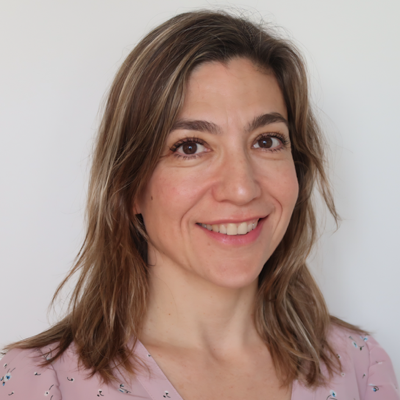
IRENE TORRES-ESPALLARDO
Senior Medical Physicist dedicated to Nuclear Medicine, Clinical Area of Medical Imaging, Hospital Universitario y Politécnico La Fe, Valencia (Spain)
Dr. Irene Torres-Espallardo is a certified medical physicist with over 25 years of experience in the field of medical physics, primarily dedicated to addressing the clinical needs of Nuclear Medicine Department.
Her research career has focused on the development of PET prototypes, corrections for quantitative imaging, and the optimization of acquisition protocols in molecular imaging. Her PhD was focused on image reconstruction for a small animal PET scanner (MADPET-II). She took part of the european ENVISION Project, dedicated to the development of the quality assurance tools for hadrondtherapy by means of PET and Compton Camera. More recently, her work has expanded to improving the accuracy of dosimetric calculations in radionuclide therapies within theragnostic procedures, with the aim of advancing personalized medicine in clinical practice.
Within the Nuclear Medicine Department of the Medical Imaging Clinical Area, Dr. Torres-Espallardo has coordinated the clinical validation of several prototypes, including PROSPET and CareMiBrain. She is currently involved in the evaluation of emerging technologies such as IMAS (total-body PET) and Helmet (a dedicated brain PET system).
She is also a key participant in the European project AIDER (EURATOM programme), which aims to develop a specialized imaging tool based on Compton camera technology to enhance imaging in targeted radionuclide therapies and enable image-based dosimetry in targeted alpha therapy.
In addition, Dr. Torres-Espallardo coleads the Nuclear Medicine domain within Work Package on High-Technology Medical Resources of the Joint Action JANE-2. This European initiative builds on the achievements of the previous JANE project (2022–2024) and aims to establish seven new Networks of Expertise over the next four years. These networks focus on cross-cutting aspects of cancer care, including complex and poor-prognosis cancers, palliative care, survivorship, personalized primary and secondary prevention, omics technologies, high-technology medical resources, and adolescents and young adults with cancer. Current efforts are directed toward defining present and future expansions in the use of nuclear medicine and their implications for equitable access across Europe.
🕒 25 Sep | AUDITORIUM 2 (GROUND FLOOR) | 17:00 – 18:30
SESSION – How PET technology bridges Science and Patient Care
Positron Emission Tomography (PET) is a powerful imaging technique that translates molecular and metabolic processes into visual data within living organisms. By using radiotracers such as 18F-FDG and more specialized agents (e.g., PSMA or amyloid tracers), PET enables the study of disease at a cellular level, providing insights beyond traditional anatomical imaging.
Clinically, PET—especially when combined with CT or MR—plays a key role in precision medicine. It improves cancer diagnosis, staging, and treatment monitoring, while also guiding therapies such as planning in radiation oncology. Beyond oncology, PET supports decision-making in cardiology (e.g., assessing heart tissue viability) and neurology (e.g., detecting Alzheimer’s disease and epilepsy).
PET also bridges research and clinical practice by supporting drug development and enabling advanced techniques like total-body imaging or dedicated prototypes (e.g., brain), which enhances sensitivity and reduces radiation exposure. Combined with innovations such as AI-assisted análisis, digital twins and faster scanning technologies, PET continues to improve diagnostic accuracy, patient comfort, and healthcare outcomes.